



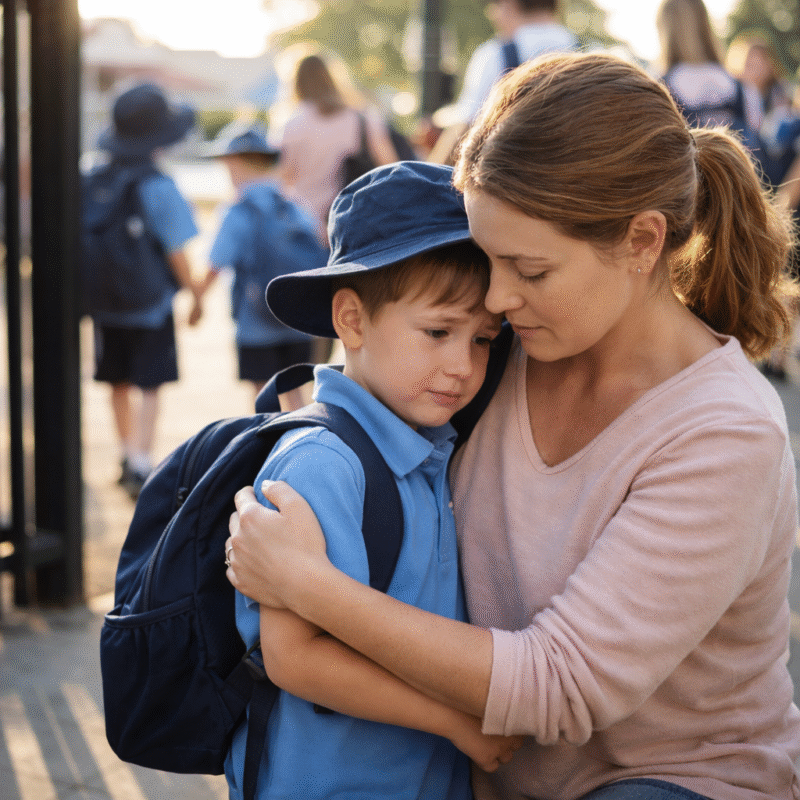
Starting preschool is a big step—for children and parents.
If your child cries, clings, or refuses to let go at drop-off, you’re not alone. Separation anxiety at preschool is very common, especially at the beginning of the school year in Australia.
This article explains why separation anxiety happens, what is normal, how to support your child using positive parenting strategies, and when extra support, like parenting coaching or counselling, can help.

What Is Separation Anxiety in Preschool Children?
Why does separation anxiety happen?
Because preschool children:
- Are still learning how to manage strong emotions
- Don’t fully understand time (“When will you come back?”)
- Feel safest with familiar adults
Separation anxiety is not a sign of weakness. It shows that your child is attached and seeking safety.
Is Separation Anxiety at Preschool Normal?
– At the start of the school year
– After school holidays
– When routines change
– If your child is tired or unwell
Most children settle within 10–30 minutes after the parent leaves.
You may want to seek help if:
– Anxiety increases over several weeks
– Your child regresses (sleep, toileting, eating)
– Drop-off feels overwhelming for you as a parent
Early support can make a big difference.
Why Preschool Drop-Off Is Hard for Parents Too

- Like they’re “doing it wrong”
- Guilty for leaving
- Anxious or rushed
- Like they’re “doing it wrong”
- Guilty for leaving
Insight: Children sense parent emotions
Children are very sensitive to adult emotions. If a parent feels anxious, guilty, or unsure, the child may feel less safe.
A calm, confident goodbye helps children settle faster.
Supporting yourself is just as important as supporting your child.
Positive Parenting Strategies That Help at Drop-Off
These strategies are based on positive parenting and emotional regulation principles.
Common Drop-Off Mistakes (and What to Do Instead)
Staying too long
Lingering can increase anxiety. ➡️ Aim for warm, confident, and brief.
Sneaking away
This can break trust. ➡️ Always say goodbye clearly.
Over-reassuring
Too many promises can increase worry. ➡️ Keep language calm and simple.
When Parenting Coaching and Counselling Can Help
Sometimes families need extra support — and that’s okay.
FAQs About Preschool Separation Anxiety
Yes. It is a normal part of development, especially during transitions.
For most children, it improves within weeks as routines become familiar.
Usually no. A short, calm goodbye helps children settle faster.
Yes. Children often mirror parent emotions, especially during stress.
If anxiety worsens, lasts several weeks, or feels overwhelming for you.
You’re Not Failing — You’re Supporting Growth
Preschool separation anxiety is not a parenting failure. It’s a sign your child is learning how to cope with change.
With the right support—for your child and for you—this stage can become a powerful step towards confidence and independence.
👉 If drop-off feels overwhelming, you don’t have to manage it alone.
We Mind offers parenting coaching and counselling to support families through transitions.

Take the Next Step
