



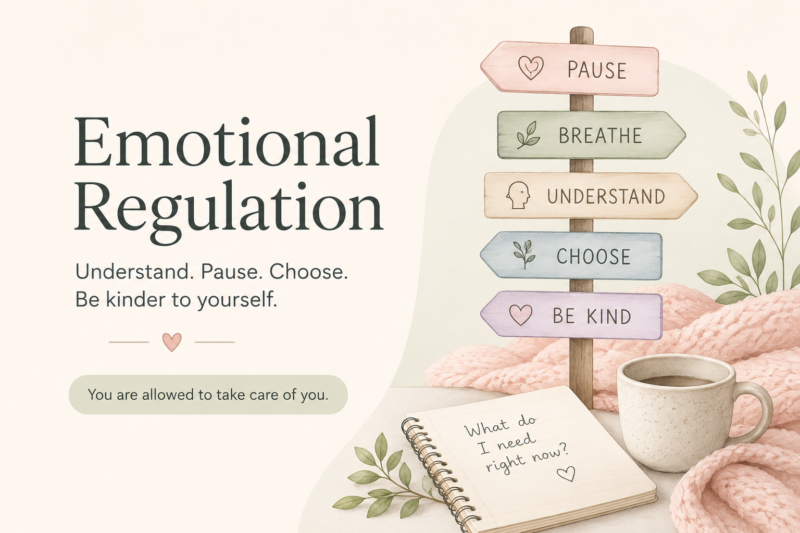
Sometimes the hardest part is not the emotion itself — it’s not knowing what to do with it
There are days when everything feels overwhelming.
A small comment hurts more than usual.
A simple task feels impossible.
You feel irritated, anxious, emotional, exhausted, or close to tears — and then immediately start judging yourself for reacting “too much.”
But emotional overwhelm does not always mean something is wrong with you.
Often, it means your nervous system has been under pressure for too long.
What Is Emotional Regulation?
Emotional regulation is the ability to:
- understand emotions,
- respond instead of react,
- calm the nervous system,
- and identify what you actually need in difficult moments.
It does not mean suppressing feelings or pretending everything is okay.
Healthy emotional regulation is about learning how to move through emotions without becoming completely consumed by them.
Why Small Things Feel So Overwhelming Sometimes
Many people assume emotional reactions happen only because of the current situation.
But emotions are affected by much more than one moment.
Your emotional capacity can decrease when you are:
- mentally overloaded,
- emotionally exhausted,
- stressed for too long,
- overstimulated,
- sleep deprived,
- burnt out,
- or constantly “holding everything together.
This is especially common for women balancing work, caregiving, relationships, emotional labour, parenting, and everyday responsibilities.
Sometimes the nervous system simply reaches capacity.
Before You Analyse Your Emotions — Check Your Basic Needs
One of the biggest mistakes people make is trying to psychologically analyse themselves while physically depleted.
Before asking:
“Why am I like this?”
Try asking:
- Have I eaten today?
- Have I had enough water?
- Did I sleep enough?
- Have I rested at all?
- Have I been under too much pressure lately?
Sometimes the body needs support before the mind can process emotions properly.
Emotional Regulation Flow Chart
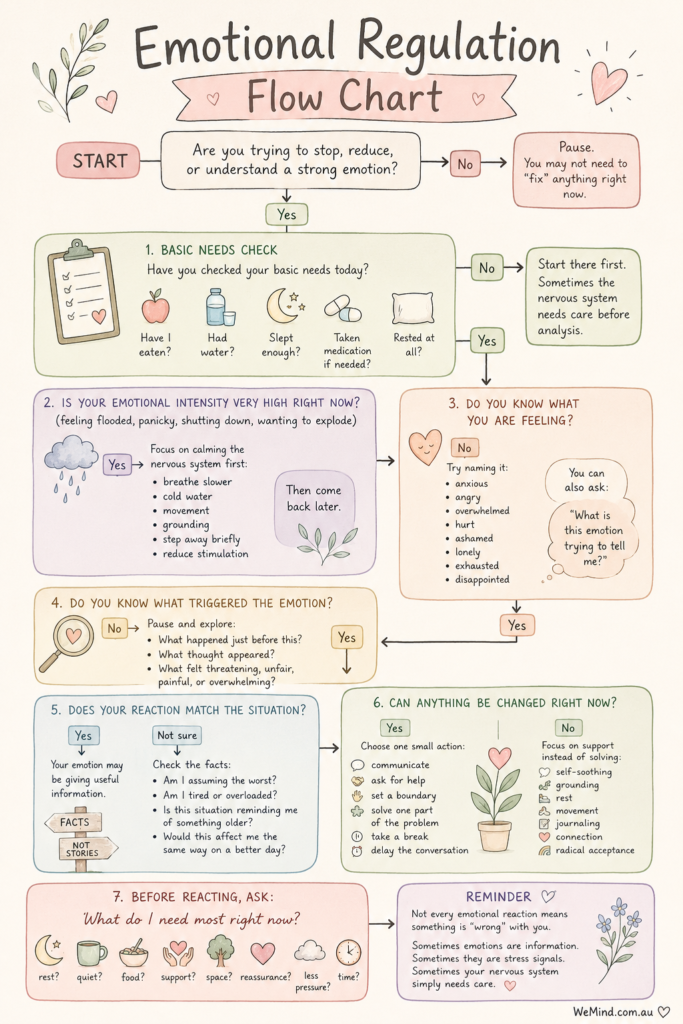
When Emotions Feel Too Intense
When emotions become very strong, the nervous system often moves into survival mode.
This may feel like:
- panic,
- emotional flooding,
- anger,
- shutting down,
- spiralling thoughts,
- or wanting to escape everything.
In those moments, problem-solving usually does not work first.
The nervous system needs calming before clear thinking returns.
Helpful regulation strategies may include:
- slowing your breathing,
- grounding exercises,
- movement,
- stepping outside,
- reducing stimulation,
- cold water,
- quiet time,
- or simply pausing before reacting.
Naming Emotions Can Help Reduce Emotional Intensity
Sometimes people only describe emotions as:
- “bad,”
- “too much,”
- or “stress.”
But identifying emotions more specifically can help regulate them.
You may be feeling:
- anxious,
- overwhelmed,
- hurt,
- ashamed,
- lonely,
- emotionally exhausted,
- disappointed,
- or unsupported.
A helpful question is:
“What is this emotion trying to tell me?”
Emotions often point toward unmet needs, stress, boundaries, grief, fear, or emotional overload.
Check The Facts Before Reacting
Not every emotional reaction fully reflects reality.
Stress, exhaustion, and past experiences can influence how situations feel.
When emotions rise, ask yourself:
- Am I assuming the worst?
- Am I exhausted or overloaded?
- Is this situation reminding me of something older?
- Would this affect me the same way on a better day?
This is not about dismissing your emotions.
It is about slowing down long enough to separate stress from facts.
Sometimes You Need Solutions — Sometimes You Need Support
Not every situation can be “fixed” immediately.
Some situations require:
- boundaries,
- communication,
- asking for help,
- delaying difficult conversations,
- or taking practical action.
But other moments require:
- rest,
- grounding,
- emotional support,
- self-soothing,
- movement,
- journaling,
- or simply permission to pause.
One of the most important emotional regulation skills is learning the difference.
A Gentle Reminder
Not every emotional reaction means you are failing.
Not every difficult feeling needs to be “fixed.”
Sometimes emotions are information.
Sometimes they are stress signals.
Sometimes your nervous system is simply asking for care.
And sometimes the most important question is:
“What do I need right now?”
