



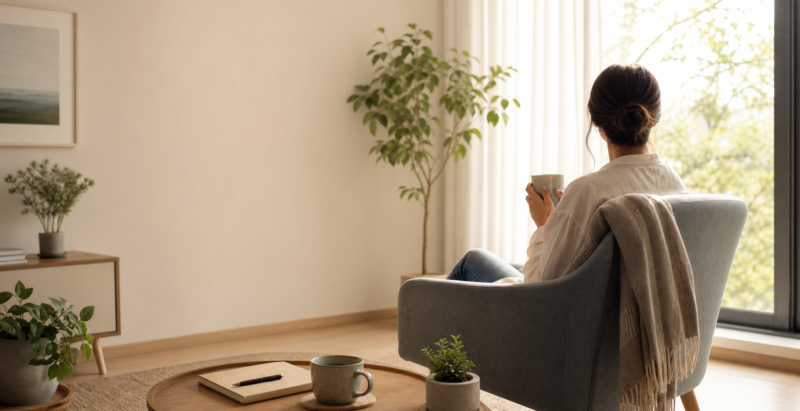
Anxiety is a normal human emotion, but it can become exhausting when worry, tension, or the need to stay in control begin to affect sleep, work, relationships, or everyday enjoyment.
Anxiety is a normal part of being human.
Most people feel anxious at times, especially before something important, uncertain, or emotionally demanding. You might notice it before an exam, a job interview, an important meeting, a difficult conversation, a health appointment, or a major life decision.
In these situations, anxiety can be useful. It can help you prepare, pay attention, think ahead, and respond to possible challenges. A certain amount of anxiety can sharpen focus and motivate action. It is one of the ways the mind and body try to keep us safe.
The difficulty is that anxiety does not always stay within those useful limits.
Sometimes anxiety becomes so familiar that we stop recognising it as anxiety. It may not look like panic, intense fear, or an obvious crisis. Instead, it can become part of the way we move through everyday life.
It may sound like:
- “I am just a responsible person.”
- “I have always been like this.”
- “I just like to stay organised.”
- “I need to think things through properly.”
- “If I do not stay on top of everything, something will go wrong.”
Sometimes these statements are true. Being organised, thoughtful, prepared, and responsible can be strengths.
But when the mind is constantly scanning for what could go wrong, those strengths can start to feel less like choice and more like pressure.
Anxiety Is Not Always Obvious
When people think of anxiety, they often imagine panic attacks, intense fear, or feeling unable to cope. For some people, anxiety does show up in those ways. For others, it is quieter and more persistent.
It can look like constantly thinking through every possible outcome. It can show up as difficulty making decisions because each option seems to carry risk. It can feel like a need to stay in control, even when the situation does not require that much mental effort.
Some people find it hard to relax, even after everything has been done. Others feel guilty when they rest, as though stopping means they are being careless or falling behind.
Anxiety can also show up in the body: tight shoulders, a clenched jaw, shallow breathing, a restless stomach, headaches, fatigue, or a constant sense of inner tension. The mind may be trying to solve problems, while the body behaves as though a threat is still present.
Over time, this can become draining.
A Useful Question To Ask Yourself
One helpful way to reflect on anxiety is to ask:
Can I switch off and relax when there is nothing that needs my attention, or does the tension stay with me even when there is no real problem to solve?
This question matters because healthy anxiety tends to rise and fall in response to a situation. For example, you might feel anxious before an interview, prepare carefully, attend the interview, and then gradually settle afterwards.
Anxiety becomes more concerning when it does not settle. The event may be over, the decision may have been made, the day may be finished, but the mind keeps searching for the next problem. Instead of helping you respond to life, anxiety starts to keep your system switched on.
It can begin to feel as though calm is unsafe, unfamiliar, or undeserved.
When Anxiety Is Usually Within The Normal Range
Anxiety is generally considered within the normal range when it fits the situation and helps you take constructive action.
For example, feeling nervous before a presentation may lead you to practise, clarify your key points, and arrive on time. Feeling anxious before a difficult conversation may help you think about what you want to say and how you want to say it. Feeling concerned about a deadline may help you plan your time.
In these examples, anxiety has a purpose. It is connected to something specific. It supports action. It settles once the situation has passed or once you have taken reasonable steps.
Anxiety is more likely to be within a healthy range when:
- it is connected to a real situation or challenge;
- it is proportionate to what is happening;
- it helps you prepare or respond effectively;
- it reduces once the situation is resolved;
- it does not significantly interfere with sleep, work, relationships, health, or your ability to enjoy life.
Normal anxiety may be uncomfortable, but it does not take over.
When It May Be Time To Seek Support
Seeking support may be helpful when anxiety becomes persistent, difficult to manage, or begins to interfere with the way you want to live.
This does not mean something is “wrong” with you. It means your mind and body may be carrying more pressure than they can comfortably process on their own.
You may benefit from support if you notice that you:
- spend much of your time anticipating problems;
- replay conversations or decisions repeatedly;
- struggle to relax, even during calm periods of life;
- feel guilty or restless when you try to rest;
- find decision-making exhausting;
- feel a strong need to control outcomes or prevent mistakes;
- notice anxiety affecting your sleep, concentration, relationships, or work;
- feel drained by ongoing mental and emotional tension;
- avoid situations because the worry feels too uncomfortable;
- often feel as though something bad may happen, even when there is no clear evidence of danger.
Support may also be useful if other people tell you that you seem tense, preoccupied, hard on yourself, or unable to slow down, even if you have come to see this as normal for you.
Sometimes anxiety has been present for so long that it feels like personality. In reality, it may be a pattern your nervous system has learned over time.
The Goal Is Not To Eliminate Anxiety
The goal of support is not to remove anxiety completely. Anxiety is a normal and necessary emotion. We need it to recognise risk, prepare for important moments, and respond to life with care.
The goal is to understand anxiety more clearly.
This may include learning what tends to trigger it, what keeps it going, and what your mind is trying to protect you from. It may also involve noticing the habits that temporarily reduce anxiety but keep the cycle active in the long term, such as over-checking, reassurance-seeking, avoidance, over-preparing, or trying to control every possible outcome.
With support, many people learn to respond to anxiety differently. They become better able to pause, assess the actual level of threat, calm the body, and choose a response rather than being driven by worry or tension.
This can create more space: space to rest, make decisions, trust yourself, be present with other people, and engage with life without constantly preparing for the worst.
Why It Can Be Hard To Switch Off
If you have lived with ongoing anxiety for a long time, switching off can feel surprisingly uncomfortable.
Rest may feel unproductive. Calm may feel unfamiliar. Letting go of control may feel risky. You may know logically that everything is fine, while your body still behaves as though you need to stay alert.
This is not a personal failure. It is often a sign that the mind and body have learned to associate vigilance with safety.
Understanding this pattern can be an important first step. Instead of judging yourself for feeling anxious, you can begin to ask more useful questions:
- What is my anxiety trying to prevent?
- What am I afraid would happen if I stopped preparing, checking, or controlling?
- Is this worry helping me take constructive action, or is it keeping me stuck?
- What would a reasonable response look like here?
- What support, skills, or boundaries might help me feel safer without staying constantly tense?
These questions can help shift anxiety from something that controls you into something you can observe, understand, and work with.
How Individual Support Can Help
In an individual consultation, we can look at how anxiety is showing up in your life and what may be maintaining it.
This may include exploring thought patterns, stressors, perfectionism, past experiences, relationship dynamics, work pressure, self-expectations, and the habits you have developed to cope. We can also identify practical strategies to help you feel calmer, more confident, and more in control of your wellbeing.
Support is not about telling you to “just relax.” It is about understanding why relaxing has become difficult and building skills that make calm feel more accessible and sustainable.
If this article feels familiar, it may be worth exploring what is contributing to that ongoing sense of pressure and why it has become so difficult to switch off.
Booking A Session
To book a session, visit www.wemind.com.au.
When booking, please include the word “Anxiety” in the comments section. Before our first session, I will send you a brief questionnaire to help me better understand your concerns and make our session as productive as possible.
If you are in immediate danger or feel at risk of harming yourself, call emergency services on 000 in Australia. For urgent crisis support in Australia, you can contact Lifeline on 13 11 14.
We Mind offers coaching and counselling to help individuals understand anxiety, reduce ongoing worry, and reconnect with a greater sense of calm, confidence, and control.

Take the Next Step
